-

-
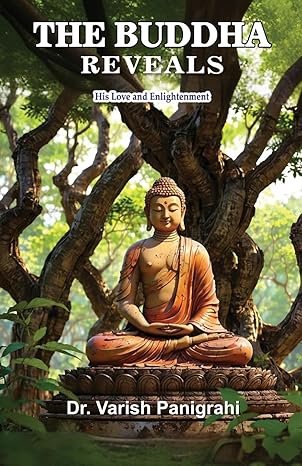
The Buddha Reveals
₹500.00The story of Siddhartha and Yashodhara, their romantic marriage, marital life, the birth of the son Rahula, and the eventual transformation in their relationship when Siddhartha left home are depicted here. They were mortals of flesh and emotions in an immortal partnership of love, understanding, and compassion! After toiling for six years in the jungles, Siddhartha achieved enlightenment and found the path to happiness in a constantly changing and suffering world and became the Buddha. Read also all the stories of how the Buddha handled the events of his long life with equanimity and championed the cause of individual dignity and the Dharma.
-
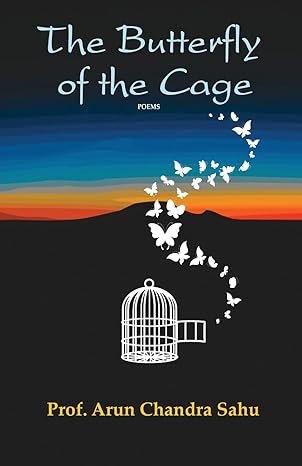
The Butterfly of the Cage
₹250.00This collection of English poems, ‘The Butterfly of the Cage’, the second transcreation by the author himself from his original Odia poetry collection ‘Panjurira Prajapati’ is based on varied themes and thoughts like human desire and despair, agony and aspiration, emotion and passion, rejoice and sorrow, love and hatred, belief and betrayal, sweet and sour memories, satire and irony, delusion and illusion, splendour of the nature, the philosophy of life, death and time, the untouched layers of human behaviour and instinct, apprehension for the uncertain future of man and environment due to anthropogenic activities, and even poetic representation of some scientific phenomena which rarely finds its place in poetry. Its ‘Prologue’ depicts an introduction to Poetry, English Poetry and Indian English Poetry which is no less than a research paper and a must read.
The book is dedicated to eminent Indian poet Padma Shri Dr. Jayanta Mahapatra who passed away on August 27th, 2023.
-

The Chameleon Boys
₹150.00*The Chameleon Boys* is a heartwarming tale set in a quaint Indian village, following five mischievous cousins known for their summer adventures. When young Karina visits her family in India, she discovers old photographs of her uncles as children and becomes captivated by their playful antics. Her father shares stories of their escapades, revealing how they earned their nickname through clever pranks and a deep connection to nature, particularly chameleons.
As summer unfolds, the boys embark on a thrilling quest inspired by clues from an ancient priest, leading them on a journey to uncover a hidden treasure. Filled with excitement, friendship, and a love for the outdoors, the story celebrates the simple joys of childhood and the enduring bonds of family.
-
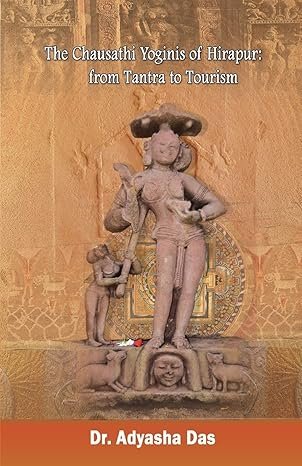
The Chausathi Yoginis of Hirapur: from Tantra to Tourism
₹200.00I had first visited Chausathi Yogini temple, Hirapur as a part of my professional work, to design a training program for the residents of the Hirapur village. A mild interest in the temple and the yoginis soon transformed itself into a mighty passion. The more I read and delved deep, the more intrigued I was. From Hirapur, Ranipur Jharial, Khajuraho, Morena to Cambodia and Indonesia, I have met the Yogini’s everywhere.
Initially I started with a song project dedicated to the Yoginis of Hirapur, my long-standing tryst with the Chausathi Yoginis, to be presented to them in the form of a song. The song took shape bit by bit, beginning under the patch of blue sky we could see from where we stood inside the hypaethral temple of Hirapur, the abode of the Yoginis. Several compositional techniques were used to evoke the essence of tantra music–tone painting, melodic phrasing, sequences, and rhythmic ostinati to create musical complements to meditation. The melody weaves the texture of a trance, helping in deepening the listeners insight. The use of traditional, authentic musical instruments further accentuated the experience. The vocal melody, mantric utterance, and rhythmic flow all were enmeshed to create the mysticism of the Yoginis.
Immediately after this, the book took shape. Based on my research and information I collected from museums in several places, I have tried to demystify the relatively unknown Chausathi Yoginis of Hirapur. Several rare aspects of this temple intrigued me. The Yogini Cult, Tantric in nature and tantra itself, projecting the efficacy of magical rituals and spell, sounds and gestures, is intertwined deeply with rural and tribal traditions. There is a diverse range of attitudes toward the tantric traditions, ranging from viewing it as a path to liberation to the relatively widespread associations of the tantric traditions with sorcery and libertine sexuality. In Hinduism, the tantra tradition is most often associated with its goddess tradition called Shaktism, followed by Shaivism and Vaishnavism. In this temple, every male deity except Shiva are replaced by a female counterpart including Ganesh all of them representing varied qualities. The Yoginis were believed to impart magical powers to their worshippers:
These powers included:
anima (the ability to become very small),
laghima (the power to levitate and to be able to leave your body at will),
garima (the power to become very heavy),
mahima (the power to become large in size),
istiva (the power to control the body and mind of oneself and others),
parakamya (the power to make others do your biding),
vasitva (the power to control the five elements) and kamavasayitva (the power to be able to fulfill all your desires) (Dehejia).According to the Archeological Survey of India the temple came to be known in 1953 (Mahapatra 1953).
This seems strange considering the proximity of the temple to the state capital Bhubaneswar. I have visited the temple uncountable times, mostly alone but often with friends and have enjoyed the quiet isolation that has been thrust upon not just this temple but the cult as well. The most beautiful Yogini temple among all, sixty three Yoginis are enshrined here. One statue is missing.
This book is a compilation of my research and readings on the Chausathi Yogini temple at Hirapur. This book was motivated by the desire to delve deeply into the tantric roots in which the Yogini cult is embedded and to link it to the significance of this site as a potential cultural tourism destination.
Dr. Adyasha Das, Author
-
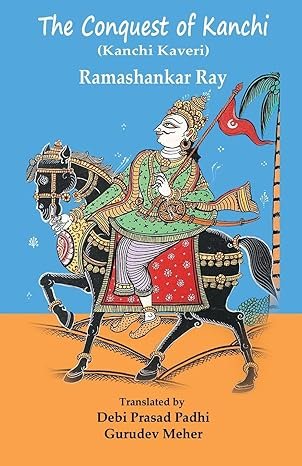
The Conquest of Kanchi: A Play
₹250.00The Conquest of Kanchi (1880) is the first play of Ramshankar Ray which was staged in 1881. It is based on the historic war between Gajapati Purushottam Dev, the illustrious king of the Surya dynasty of Odisha; and Saluva Narasimha Dev, the ruler of Kanchi. The play is foregrounded on the legend of romantic love between Gajapati King Purushottam Dev and Padmavati, the princess of Kanchi which led to the invasion of Kanchi and eventually their wedding. Ray has retained the legend of Lord Jagannath and Lord Balabhadra joining the battle, being entertained by the milkmaid Manika on the way to Kanchi and the minister’s ingenious efforts to unite the lovers in wedlock during Rath Yatra. Ray has adapted this glorious history of love and has added romance, heroism, conflict, excitement, war, suspense and surprise to transform it into an entertaining work of art. The play instantly won audiences’ hearts with its popular nationalistic theme and attractive presentation.
-
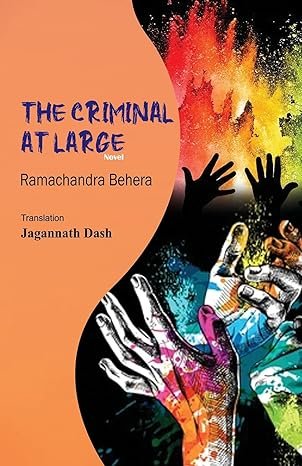
The Criminal At Large
₹250.00THE CRIMINAL AT LARGE is a nontraditional story of feminism that attempts a definition of woman through a series of thrilling episodes narrated in an arresting style and language that keep the reader spell bound. Chhaya, the female protagonist in the process of becoming a woman experiences the impact of different male touches including that of brutal bestiality. She never gives in to anything; she challenges the legal system, asserts a prestigious social position commanding love and respect; yet the question about what she is remains unanswered.
-
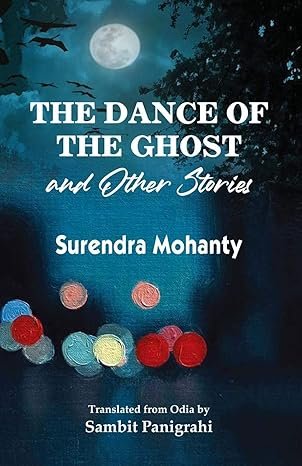
The Dance of the Ghost and Other Stories
₹350.00This book is a work of translation, from Odia to English, of a few short stories collected from the immense body of writings by eminent Odia writer Surendra Mohanty. Kaleidoscopic in nature, it exudes a multiplicity of themes including mythological, social, political and personal. The anthology contains tales based on Buddhist mythology, on episodes from the great Indian epic The Mahabharata while some others are based on personal, social and political themes. Some of them evoke personal emotions pertaining to the writer’s own life and re-enact episodes and events from his bygone past; the title-story “The Dance of the Ghost” is its prime example. On the other hand, a story like “Amrapalli” is based on the tragic life a significant and renowned historical persona by the same name whereas a story like “Srikrishna’s Last Laugh” centres around a less-known and almost forgotten episode of the illustrious Indian epic The Mahabharata. Contrary to the above-mentioned themes, a story like “The Miner” is entirely based on tribal life and culture while depicting the trials and tribulations of the old tribal protagonist who struggles desperately for his survival in the midst of relentless cultural decadence and corrosion. He is helplessly caught in the interstices of a changing time where his traditional culture is invaded by modernity and the world of pristine Nature in which he used to live is under the verge of complete annihilation due to the encroachment of corrosive modernist and industrial culture.
Thus, the book presents itself as a kaleidoscopic compendium of tales where stories of different themes, tastes and concerns are included in the anthology. This work is also an attempt on the translator’s part to make a regional author of eminence enter into the cosmopolitan arena of readership while enabling global readers to explore into the enormous and unexplored literary firmament of another region, of another culture, of another language. Expectedly, this work would form an enriching symbiosis between different cultures and knowledge systems, would bridge the gap between ensconced cultural and linguistic territories, would exchange knowledges and transfer ideas.
-
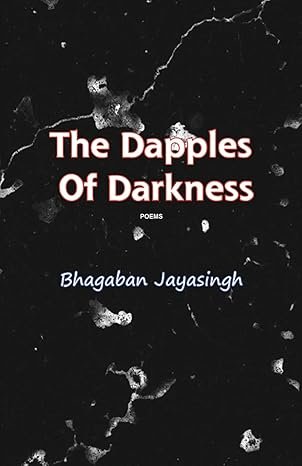
The Dapples of Darkness
₹200.00A poetry collection by Bhagaban Jayasingh. Educated at Ravenshaw College and Allahabad University, Jayasingh is a celebrated Odia poet and a critic of eminence who writes both in Odia and English with equal ease and flourish. He has published seven volumes of poetry collections in Odia and five volumes of poetry in English translation. An academician by profession, Jayasingh lives in Puri.
-
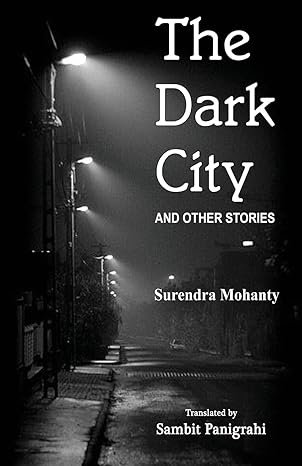
The Dark City and Other Stories
₹300.00I must now share with the audience some of my own experiences of translating Mohanty from Odia to English. It is famously said by eminent American poet Robert Frost that “Poetry is what is lost in translation”-a statement that is a clear indicator of how much difficult it is for the translator to carry the whole essence of the original text into the translated text. Each language is intrinsically embedded with certain cultural values and nuances specific to its own and which are perhaps untranslatable. Certain colloquial expressions, which Mohanty abundantly uses in his writing, are its best example. As a translator of Mohanty’s short stories, I have tried my level best to negotiate between two languages and two cultures that are perhaps diametrically opposite to each other. It must be understood however that absolute faithfulness to the original text and the original language is an impossibility.
Mohanty, in spite of his greatness and stature as a creative writer in Odia, can at times be accused of unwarranted verbosity though I do understand that a creative writer’s creative process has limitless dimensions. Translating wordy sentences and expressions may look a bit challenging, but it is also a pleasurable experience to simplify the clumsiness of certain expressions in the target language, that is English.
-
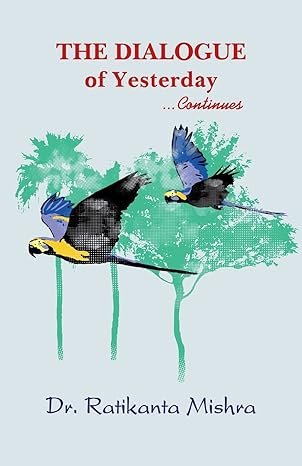
The Dialogue of Yesterday
₹200.00My first collection of Poems titled “The Silence… Between Two Words” sees the profundity of darkness and banality of light between two pre-destined, immutable points called Life and Death. The characters, nay. Beings of my soul now clamour for space as has been their due under the Sun and the lap of Mother Earth. Being a liberal father, I have but to respect their sensibilities in the present Anthology. During the course of dialogue, they have questioned, interrogated, appropriated, negated and denied each and every on their way, the Established Canonical Text of yesteryears dictating thereby the discourse of present in particular to find out the kernel of truth and falsehood. They have assured in crystal clear premises and hyperboles to push me to the edge and ask the subtle differences between Creator and Created. The density and depth of my little understanding of life provokes me to seek the root of our existence, the dialectics of hope and despair, anguish and ecstasy. With utmost humility, my submission is that a dialogue of yore continues with singular vigour and vibrancy to the present moment when you read this foreword. A dialogue is ensued not to find out The Ultimate Reality, but to churn out alternative realities. I dedicate this book to the critically objective scrutiny and wisdom of my readers.
Dr. Ratikanta Mishra -
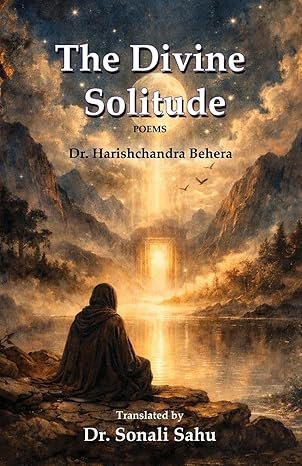
The Divine Solitude
₹350.00The Divine Solitudeis the English transcreation of “Aparthiba Nirjanata” by Dr. Harishchandra Behera, a celebrated voice in Odia poetry whose work moves effortlessly between myth and lived reality, devotion and dissent, intimacy and vastness. Translating these poems has been less an act of linguistic transfer and more a journey of listening-listening to silences, pauses, symbols, and the emotional undertow that carries the poem beyond words.
The poems gathered here inhabit a space where the earthly and the divine overlap: rivers remember motherhood, boats become lives, feet turn into lotuses, and solitude itself acquires a sacred resonance. Mythological figures-Rama, Ahalya, Vishwamitra, the ferryman, the flute of the Kadamba grove-are not distant icons but breathing presences, entering daily life, desire, doubt, and ethical questioning. This poetry does not merely retell myth; it interrogates it, softens it, humanizes it.