-
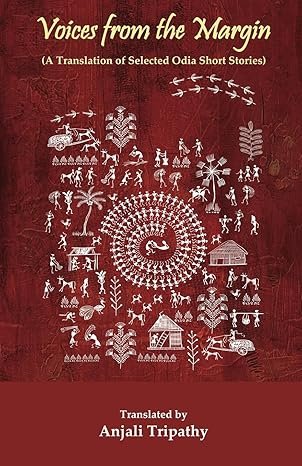
Voices from the Margin: A Translation of Selected Odia Short Stories
₹250.00Abani Kumar Baral’s “The Bamboo Queen” Bhagabati Charan Panigrahi’s “Jungli”Durga Madhab Mishra’s “Buda Kirisani”Pranabandhu Kar’s “The Vanquished”Pranabandhu Kar’s “Two Friends”Rajat Mohapatra’s “The Daughter of Niyamagiri”Bhubaneswar Behera’s “The Flying Fringe”Gayatri Saraf’s “The Burning Mountain”Tarunakanti Mishra’s “Rebati” Kamalakanta Das’ “The Allure of Ghasi Lane”
-
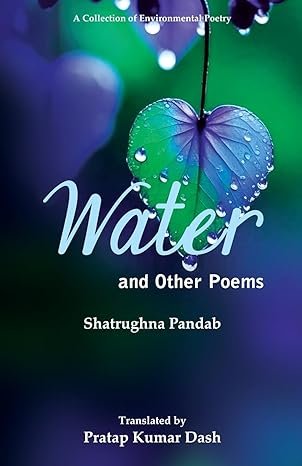
Water and other poems
₹250.00In the twenty-six poems, interestingly there is a multimodal rebellious voice or a sort of outcry advocating for the surrounding environment that has been grossly exploited at the cost of life of millions of plants, trees, birds, animals, the five ethereal elements and the natural habitat. It has gone to such an alarming state that the cosmic powers like the sun, the moon, the seasons and all the gifts of nature have become defunct hinting at the loss of natural traits of human being and sheer destructive consequences of this artificial life. The greedy and ignorant human beings have been destroying the irrecoverable surrounding natural wealth in such a way leading to unspoken disasters. Consequentially, it searches for the dire need of water, wind, food, livelihood and many more things as a part of natural lifestyle and sustainability. What’s more, the denatured human being is in search of the aesthetic notions in every aspect of natural life. In this way, each of the poems carry in them rhetorical questions representing in fact the questions of each of us linked to our survival.
-
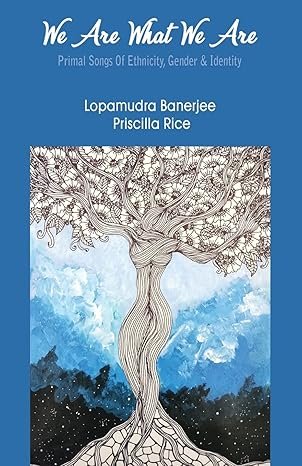
We are What We are
₹300.00Long ago, in the folds and crevices of time, when an Indian-Bengali girl in West Bengal, India and a Mexican-multi-ethnic Latina girl in Texas, USA were germinating as poets, storytellers during the incubation period that generally characterizes girlhood, the essence of their words and their beings were accumulating in their consciousness, silently, yet surely. Those words, poems, monologues were in their gestation period, only to be born years later as precious pearls of their distinct identities in relation to their ethnicity, their gender roles et al. Decades later, both women as poets, artists, storytellers developed their voices in the universe as unique outbursts of culture, gender and thus, ‘WE ARE WHAT WE ARE’ was born, a manifesto of their unapologetic primal songs, a manifesto of their cumulative consciousness as women of letters.
-
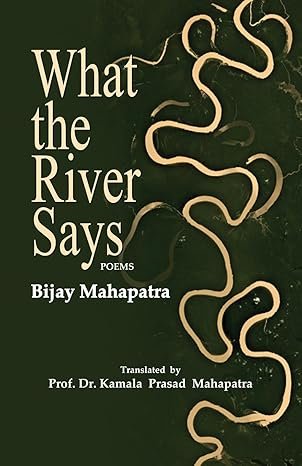
What River Saya
₹250.00Contemporary Odia Poetry, unlike Poetry in other languages of India, exhibits a character that renders it untranslatable into a host language of non-sanskritic origin. The multiple openings, the verbal imageries, the inflections and the oralities subsumed by written words, often make it a translator’s nightmare. In that sense Bijay Mahapatra is a difficult Poet to translate into English. I am delighted to see that Prof. Kamala prasad Mahapatra in rendering BM’s Poetry into English succeeds in tiding over most of the obstacles posed by the typical knots and chains in which the Poet spins his metaphor laden content, often leaving his intent shrouded, opaque or playfully half done. As a translator of repute and a Professor of English, KP knows only too well that the route to meaning in highly metaphorized poetry is bedeviled by allusions, and extrapolations not quite amenable to the discipline of the English Language. He gets over the glitz by overflying the intended, the implied and What the River Says 5 the conjectured by sticking to the literal. That in fact is the route to reach the sensory subtext of fascinatingly illusory Poetry. Our thanks are due to both, the Poet and the Translator for setting this stage for us to show how the contemporary Odia poetry functions as a site for translation.
— Haraprasad Das, Eminent Poet
-
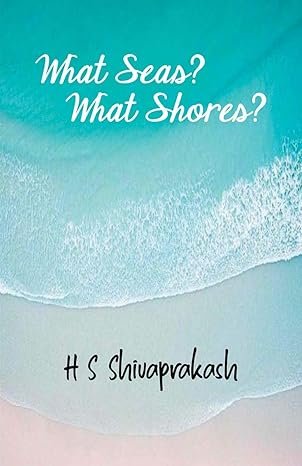
What Seas? What Shores?
₹250.00Taking us through different times and places, engaging with history and mythology but always capturing the intensity and humor of every passing moment, these poems confront us with fears, nightmares and visions of contemporary world in all their nuances. They keep transiting between wakeful and dream experiences in search of a rooted but also vagrant self of the protagonist in an expression deeply personal and broadly collective.
-
Whisper of the Anklets
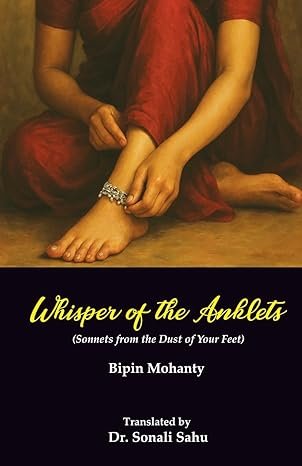
₹225.00Whisper of the Anklets (Odia – Paunjira Pandulipi) by Bipin Mohanty is not merely a book – it is a lyrical pilgrimage into the soul of rural Odisha. Each of its sixty sonnets resonates with the rhythms of village life: the soft jingle of anklets echoing through narrow earthen lanes, the golden glow of evening lamps lit at the Tulsi shrine, and the ageless serenity of love lived in silence, simplicity, and sacredness. Composed in the classic Shakespearean sonnet form (4-4-4-2), this collection distills the essence of village emotions – a world where moonlight romances the fields, where glances speak more than words, where rituals cradle relationships, and where even silence carries the weight of longing. These are not merely poems; they are portraits – of a place, a culture, and a heart that beats to the quiet music of belonging. The sonnets celebrate love in its most unadorned form, the subtle elegance of rural femininity, the spiritual intimacy of shared silences, and the timeless grace woven into everyday moments. At their core lies a deep rootedness – to the soil, to fleeting memories, and to an emotional heritage passed down like heirlooms. The anklet, in this collection, is not just an ornament; it is a metaphor. It whispers of memory, womanhood, devotion, and legacy – a sound that lingers long after the feet have passed, echoing across generations. In translating Whisper of the Anklets, my endeavour has been to preserve not only the meaning of each sonnet but the mood – the cadence, the subtle music, the quiet intensity that make Bipin Mohanty’s work so richly evocative. This is more than a linguistic bridge; it is an emotional and cultural one. Whether you come from the heartland of Odisha or are discovering its lyrical traditions for the first time, I hope this collection touches you – allowing you to feel mist laced mornings, hear voiceless prayers, and walk gently through the tender terrain of these poems. Whisper of the Anklets is my humble tribute – to poetry, to love, to land, and to the timeless whispers that shape our souls. —-Dr. Sonali Sahu
-
Whisper of the Rock Elephant: Ashoka and the Kalinga war
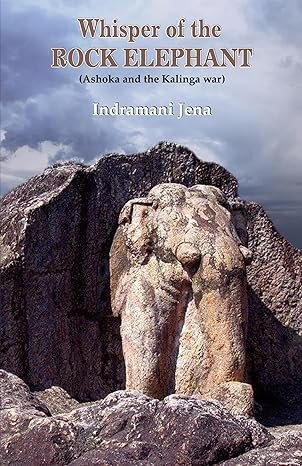
₹350.00The ‘Whisper of the Rock Elephant‘ is an untold tale from the shadowy pages of ancient history, where an Emperor, having beheaded and captured a vast army from a neighbouring kingdom, foresaw the dangers of his power. His realization of the need to devote his life and wealth to the propagation of truth and righteousness led to a profound transformation, turning him away from conquest. The devastated land was Kalinga, a state whose people, known for their free spirit, refused to surrender. 1Much of what is known about this dark period is a mix of fact and imagination, better conveyed through the whisper of Seto, the rock elephant carved from a hill beside the battlefield. Seto is said to possess divine power, like a Buddha enlightened even before birth, and is believed to be a heavenly creature belonging to Lord Indra, ruler of the heavens. These whispers passed down through generations, provide a unique perspective on the events of that time. Seto’s whispers reveal more than the victorious Emperor Piyadasi’s words in his Kandahar rock edict. The Proclamation expresses his guilt over the bloodshed and his transformation towards piety and Dhamma. His remorse was inscribed across India and beyond on rock surfaces, alongside pillars and monuments engraved with ancient scripts. Seto speaks of the deeper cause of the Emperor’s remorse-a sorrow that led him to follow Tathagata Buddha. From Kalinga’s battlefield enlightenment took root in the Emperor’s mind, persistently pinning and guiding him towards righteousness.
Through this story, readers can discover the invisible ray of humanity pierced through the darkness, settling the turmoil within the Emperor whenever inhumanity threatened to unsettle him.
-
Whispers Between Silence and Light
₹250.00Whispers Between Silence and Light is a meditative journey through the quiet spaces of human experience-love and loss, memory and solitude, the eternal dialogue between presence and absence.
From the windswept edges of Patagonia to the dusted trails of the Camino, from the still gaze of Lady Liberty to the silent warmth of a familiar presence, each poem invites the reader to pause, breathe, and listen.
This is poetry that lingers-gentle yet piercing, personal yet universal. It is for those who have loved and let go, who have sought meaning in stillness, and who understand that sometimes the most profound truths are found not in what is spoken, but in what is left unsaid.
-
Within Her Home and Outside: Essays on Indian English Poetry
₹320.00We are glad that we can travel well-disguised through words between the abstract and tangible, between home and the world. We have grown with many pillars of Indian wisdom and faith. We can express anything and everything with style that defines our long roots, myths and engagements with words. We arrest ideas from an acre of love to politics of power. With some generations of English on the back, many are composing poetry from different soul spaces and mesmerizing the world with their magical abilities of experimentations with style and themes. Contemporary India is really shining with confident and aesthetically satisfying English poetry. In the busy traffic of poets these days some choose to return again and again. Some are extraordinarily calm, quiet and soothing like music. Some are powerfully tender, honest and contemplative. There are numerous platforms, online spaces, journals and magazines which only focus on poetry and reviews of poetry. Many Indian poets and professors are engaged with guest editing special issues for poetry and poetic ties in very prominent journals abroad. There was a time in early 1900 when we couldn’t write a good poem on the Indian Non Violence Movement or the Freedom struggle in English. We struggled. That anxiety was over in the 1950s. Over a period of seventy five years or so, we are a brand destination for English poetry. Henry Louis Vivian Derozio or Kashiprasad Ghoshto Arundhathi Subramaniam is a long walk to freedom! Let us repeat, “With its quiet glory, I brand my heart.” as Basudhara Roy writes in A Blur of a Woman. A review is all joy held in the aura; a truce with light and knowledge. Indian English Poetry is, currently, going through its healthiest and happiest phases. Each union in life is a poem. Eachbreaking is a season of silence, one note to another. The essays in this book attempt to address, in their own non linear way, the significant gap between what’s on the pages and reviews, creativity and criticism, and indomitable passion. This book explores how poetry writing is meditation, experimentations with truth. The stray images and thoughts that the meditator blows away are the rich suggestive stuff of poems. Every little bit of irrelevancy may turn out to be what the poem is really about. Poetry holds the aura of being ‘pure’ and ‘untouched’, song without a landscape. The sublime premise of contemporary Indian English poetry evokes from the post-independence Indian experiences. The plural and the singular seem to co-exist in contemporary English poetry written from different parts of India. Noted critic V. K. Gokak said, “It has to be Indian because it has to be truly universal and greet its compeers in the domain of world literature.” Going through the various literary (and cultural) movements that have shaped Indian English literature, one can experience as much by their variety yet integrity as their common sources and concerns.
In the cacophony of English poetry in India all poems do not speak to us equally. All poets do not write with equal strength and ease. My love affair with poets began when I was at seventeen/eighteen. My hunger drove me to Keats, Neruda, Jibananda, Seferis, Lorca, Quasimodo, Parra, and some others. English poetry in India has no particular quarter now; good poetry is written from small cities and villages all over the country. Many poetry groups are active in upholding poetry to its apex.
-
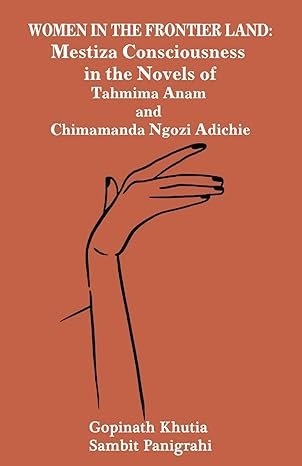
Women in the Frontier Land: Mestiza Consciousness in the Novels of Tahmima Anam and Chimamanda Ngozi Adichie
₹390.00The book is divided into five chapters.
“Chapter One” entitled “Introduction,” provides a comprehensive introduction to the two mentioned novelists and their works, does an extensive literature review of the existing critical works on their writings and finally, establishes the stated point of departure.
The Second Chapter “War and Women Subjectivity in A Golden Age and Half of a Yellow Sun” studies the wartime agency of women in the 1971 Liberation War and the Biafran War respectively. It investigates into the genealogy of the emphatic emergence of women characters from their restrictive domestic spaces in times of national emergency and their eclectic and constructivist interventions in the said wars, from the background.
-

Women on the Frontlines: Convergence of Fact and Fiction in Martha Gellhorn’s Works
₹425.00Martha Gellhorn’s extraordinary career as a reporter took her to the front lines of nearly every major international conflict, right from the Spanish Civil War to the conclusion of the Cold War; her combat reports are among the best of the century. Through her correspondence, we get to know the woman behind the frequently enigmatic journalist, Gellhorn, as she chronicles her turbulent marriage to Ernest Hemingway and her friendships with notable figures from the 20th century. Over four decades and numerous locales, including the highlands of East Africa, elegant dinner parties in London, and Depression-era America, Martha Gellhorn’s novellas exhibit the same traits that have made her one of the most renowned journalists of our time: a remarkable sense of place, incredibly fast and precise prose, and an unwavering focus on the motivations behind her characters and actions. Above all, Martha Gellhorn investigates how individuals, both male and female, live quietly-and frequently with passion-amidst the historical turbulence.
-
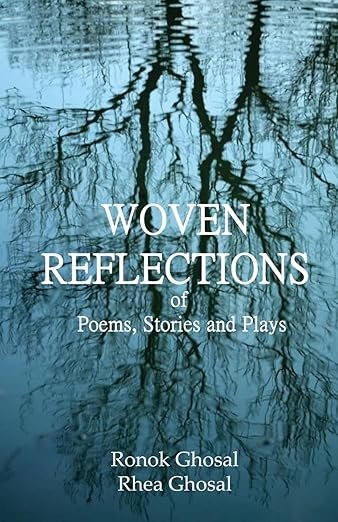
Woven Reflections of Poems, Stories and Plays
₹250.00This is a book of poems, stories, and plays. The texts that comprise this volume are a product of moments of our life: times looking back, times to search for, and times of change. However, these do not stand alone; they speak to each other within a layered experience unfolding across various formats.
We chose to begin with poetry because it captures a moment: the raw emotion, the flash of a thought often in the most distilled way. It can be a whisper, a shout, or a quiet realization that beckons the reader to interpret it in their own way. But sometimes, a moment needs more than that – it needs more context, more depth, and space to breathe.
That’s where the short stories come into play, to be able to continue the themes developed in the poem and give a narrative slant to them. One will see the emergence of characters, and settings defined.
And then the plays. The way people talk, the spaces between, and the tension of what is never said have always interested us. Writing the stories into scripts seemed the natural step, allowing them to be articulated and performed and to live from the page. The transition from poetry to prose to stage was a way for me to experiment with perspective, structure, and voice.
For us, writing has always been about finding the right form to express an idea. Some thoughts are best left as poetry, others need to be lived through a story, and some are meant to be spoken out loud, felt in the rhythm of conversation. This book is a collection of those choices-a reflection of how words can shape and reshape meaning depending on how they are framed.
We hope you like reading this book as much as we did writing it.
– Ronok and Rhea