-
-
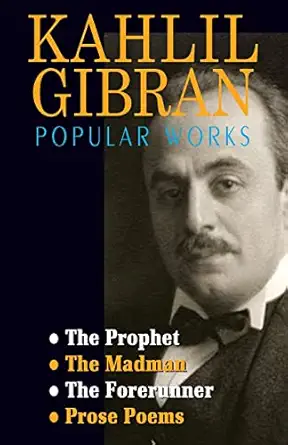
Kahlil Gibran Popular Works: The Prophet, The Madman, The Forerunner, Prose Poems
₹350.00This Collection includes Gibran’s most popular works including
– The Prophet, 1923
– The Madman: His Parables and Poems, 1918
– The Forerunner: His Parables and Poems, 1920
– Prose Poems, 1934
-
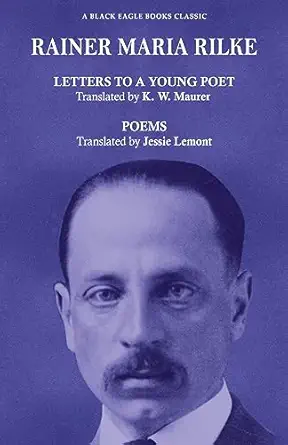
Letter to a Young Poet and Poems
₹300.00“Letters To A Young Poet” by Rainer Maria Rilke is a prosaic work, but it refers directly to poetry. There are ten letters written to a young man about to enter the German military.
In the very beginning of the 1903, Rilke received a letter from a twenty-year old lieutenant of Austro-Hungarian army Franz Kappus. Verses were enclosed to the letter: the lieutenant turned out to be a poet. Rilke answered. Rilke wrote Franz Kappus ten letters; the last of them is dated by December 1908. After Rilke’s death, the letters were published in a separate book entitled “Letters To A Young Poet”. Of all Rilke’s extensive correspondence, these letters won the greatest popularity. It is explained by their content: there is nothing personal or private in them; Rilke wrote about the poetry, nature of poetic works, irony, loneliness, love etc. His philosophy-aesthetic views of that time are well reflected in these letters.
-
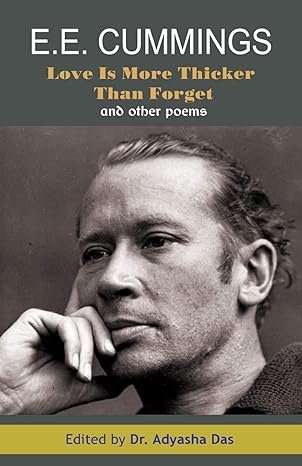
Love Is More Than Thicker Than Forget And Other Poems
₹300.00E.E. Cummings is one of the significant poets who has enriched American poetry with his innovative contributions. His poetry reflects the transition from eroticism to transcendence, from the world of knowledge to the realm of wisdom. This collection of one hundred selected poems of Cummings spans the entire range of his creations, from the early writings to poems created at the peak of his poetic career. From being thought-provoking and humorous to sensitive and profound portrayals, these poems represent his creativity at its best.
-
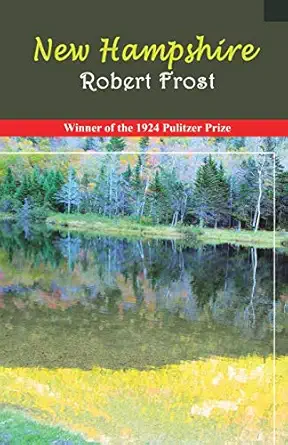
New Hampshire
₹250.00Robert Frost’s poetry collection was published in 1923 and won the 1924 Pulitzer Prize for Poetry. The book included several of Frost’s most well-known poems, including “Stopping by Woods on a Snowy Evening”, “Nothing Gold Can Stay” and “Fire and Ice”.
-
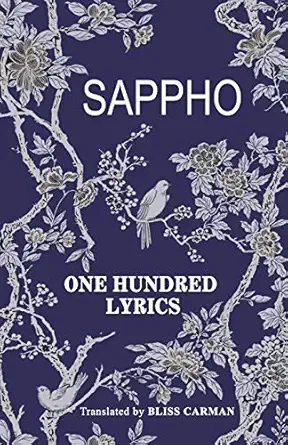
One Hundred Lyrics
₹300.00Perhaps the most perilous and the most alluring venture in the whole field of poetry is that which Mr. Carman has undertaken in attempting to give us in English verse those lost poems of Sappho of which fragments have survived. The task is obviously not one of translation or of paraphrasing, but of imaginative and, at the same time, interpretive construction. It is as if a sculptor of to-day were to set himself, with reverence, and trained craftsmanship, and studious familiarity with the spirit, technique, and atmosphere of his subject, to restore some statues of Polyclitus or Praxiteles of which he had but a broken arm, a foot, a knee, a finger upon which to build. Mr. Carman’s method, apparently, has been to imagine each lost lyric as discovered, and then to translate it; for the indefinable flavour of the translation is maintained throughout, though accompanied by the fluidity and freedom of purely original work.
-
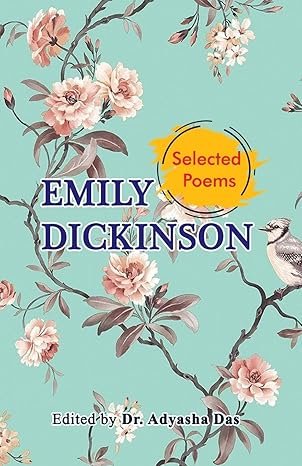
Selected Poems of Emily Dickinson
₹250.00Widely acknowledged as an original creator who defined her own rules for poetry, Emily Dickinson remained unsung during her lifetime, with very few published works. The unconventional brilliance of her poems was only discovered posthumously. Dickinson experimented with grammar, form, structure and expression of the poem. These innovations in her style of writing have influenced modern poetry. This collection of poems reveals her poignant, intellectual and emotional reflections on various themes.
-
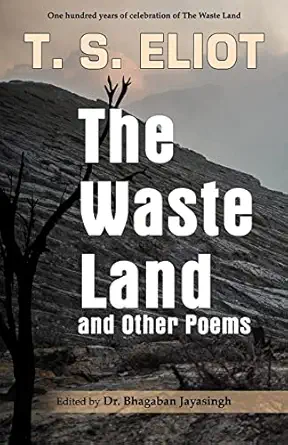
The Waste Land and Other Poems
₹160.00Widely regarded as “The Poem of the Century, “The Waste Land is an “infinitely mysterious poem,” which, according to John Xiron Cooper, “is a poem we have learned to handle, but not a poem, we have tamed.” It is true that publication of the poem marked a watershed moment in the history of British poetry. Soon after its appearance, first in the inaugural volume of The Criterion (October 1922), a quarterly British literary magazine, founded and edited by Eliot himself, in London, and next in the American publication The Dial in New York (November 1922), the poem came to be regarded as one of the seminal works of modernist poetry, and Eliot as a very important literary figure of the time. Eliot earned the Dial Award of $2,000.
It is important to note that The Waste Land has no definite structure. It is a poem that does not have a plot. Nor does it have a beginning nor an end. The poetic fragments mirror the fragmentation of life in the cities of Europe, devastated by World War I. It can be termed as “a heap of broken images,” a poem, as asserted by Harold Munro, “a potpourri of descriptions and episodes.” Since the poem is based on Tiresias’s visions which come to him in spurts, The Waste Land seems to be fragmented or disjointed. The reader is expected to string all these fragments together to derive meaning.
The Waste Land is also a multi-voiced poem, it has a multitude of voices, voices spoken in Greek, Latin, Sanskrit, German, and Italian. It is also richly allusive and polyvocal. It alludes to several texts such as Ovid’s Metamorphoses, Dante’s Divine Comedy, Baudelaire’s Les Fleurs du mal, Shakespeare, Buddhism, Hindu Upanishad and others. The mind-boggling allusiveness and profundity of the text just went over the heads of his readers, who were initially baffled by a string of quotations and reference to a variety of sources in multiple languages like Greek, Latin, French, German, Italian and Sanskrit. They could hardly grasp Eliot’s ‘aesthetics’ of fragmentation and juxtaposition, which can be taken as an inextricable part of the poem’s symbolic significance.
The Waste Land is basically a peopled landscape; many characters, several of whom are women, roam around freely in the wasteland. It is interesting to note that “all the women are one woman, and the two sexes meet in Tiresias.” All these women have their own individual story to narrate, their own voice for people to listen to. Such women like Marie, a niece and confidante of Empress Elisabeth of Austria, Belladonna, the Lady of the Rocks, Lil, the mother-of-five whose unhappy marriage is discussed by her friend in a London pub, the fortune-teller Madame Sosostris, the typist girl, who is “bored and tired,” the nymphs, who happened to be the friends of the loitering heirs of city directors vary from each other in terms of their age, class, educational level or socio-economic status.
The Waste Land is fragmented into five sections: ‘The Burial of the Dead, ‘ ‘A Game of Chess’, ‘The Fire Sermon, ‘ ‘Death by Water’ and ‘What the Thunder Said.’