-
-
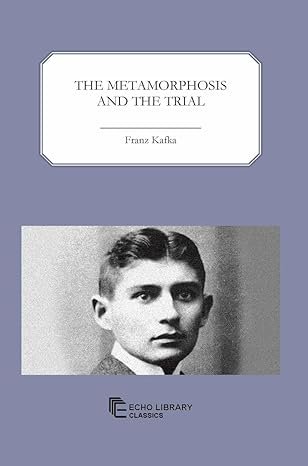
The Metamorphosis and The Trial
₹350.00In “The metamorphosis,” a man finds himself transformed into a huge insect and experiences many changes in his life, and in “The trial,” narrates the experiences and reactions of a respectable bank functionary after his abrupt arrest on an undisclosed charge.
-
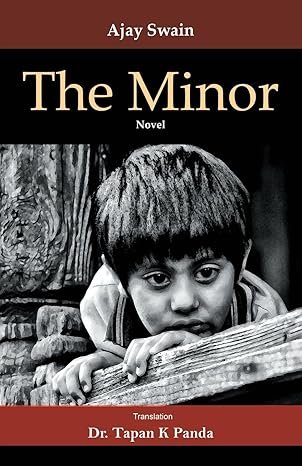
The Minor
₹300.00The Minor (Nabalak) is the story of the metamorphosis of the protagonist. The memories of who he was and where he lived are important to him. When he was a child, he seldom thought of the future. This innocence left him free to enjoy as few adults can. The day he frets about the future is when he leaves his childhood behind. The truth of life is that we get farther away from the essence that is born within us. We get shouldered with burdens, things happen to us, loved ones die, and people lose their way for a reason or another. It’s not hard to do in this world of crazy mazes. Life does its best to take that memory of magic away from us. You don’t know it’s happening until one day we feel we have lost something, but you are not sure what it is. Childhood, after all, is the first precious coin.
-
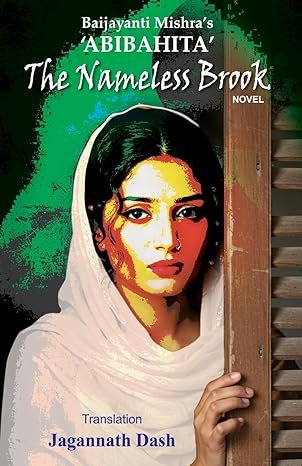
The Nameless Brook
₹400.00The Nameless Brook (Odia-Abibahita) is a moving tale of Jhara, a dedicated nurse whose life is shaped by love, loss, and quiet strength. Orphaned and emotionally isolated, she faces heartbreak, betrayal, and the weight of societal judgment. When she meets Suren-a gentle soul trapped in a loveless marriage-Jhara forms an unexpected bond with him and his daughter, Rista. But tragedy strikes, leaving Suren paralyzed and Rista vulnerable. Defying convention and family pressure, Jhara steps in as their caregiver and emotional anchor. Through trials of love, duty, and identity, the novel unfolds as a story of resilience and selfless devotion, where Jhara discovers that true family is built on compassion, not convention.
-
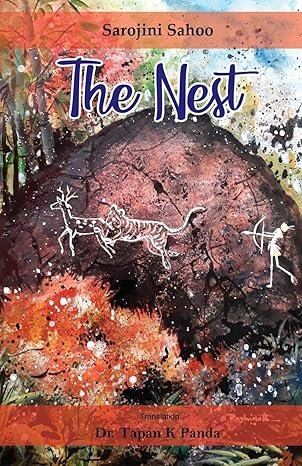
The Nest
₹300.00Pakhibsa is a story of the decadence of a family and their dream. This multi-dimensional novel includes a downtrodden family saga and the socio-economic picture of Odisha. The novel portrays a chain of events of an untouchable, downtrodden cattle bone collector, called Satnemis (through the protagonist Antaraa) and his family in western Orissa. Antaraa, the head of the family; his wife Sarasi; their three sons Sanyaasi, Daaktar, and Okil; and their daughter Parabaa.
A downtrodden man dreams of seeing his sons established in their lives. So, he names them Collector, Doctor (Daaktar), and Lawyer (Okil). He dreams of seeing his only daughter, Parabaa, as a bride, but was it ever possible?
The elder son, Sanyaasi, became a bohemian artist. The second son Daaktar became a bonded labourer. The third son Okil joins the Naxals. Days of hunger force Parabaa to be raped for a plate of rice by a forest guard, and later, she adopts the profession of prostitution. The novel ends with the death of Okil. The author juxtaposes lines from Bhagavat (a holy book in every Odia family) to build melancholy and generate intense emotional outages for the characters.
-
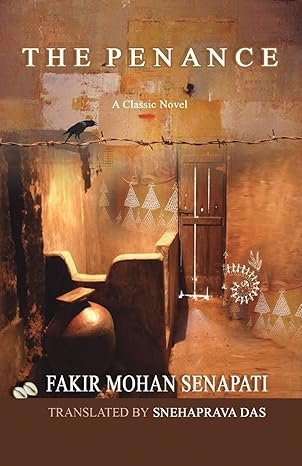
The Penance
₹380.00Prayaschita (The Penance) is the last of Fakir Mohan Senapati’s four novels and the third and the last in his ‘trilogy of crime and justice’, to use the epithet coined by the eminent Senapati scholar John Boulton. The first two novels of the trilogy are Chhamana Athaguntha (1902, Six Acres and a Third) and Mamu (1913, The Maternal Uncle). Prayaschita was published in 1915, just three years before the death of the novelist. The novel is of value for the light it casts on Fakir Mohan Senapati’s increasingly dark and tragic vision of life lived under the shadow of colonialism. He wrote it to defend the traditional values of the Hindu way of life which he saw as being gravely threatened by the alien value system of the British that had made huge inroads into the Indian society. In fact, it is a telling assault on the English education that is perforce mounted in the form of a defense of the traditional Indian society.
-
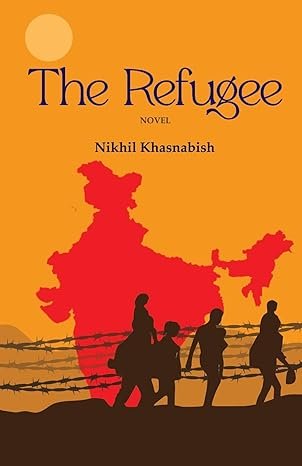
The Refugee
₹250.00Gunen Sarkar, a riot victim, comes to Assam in 1964 as a refugee from East Pakistan. He is separated from his wife, son, and one-year-old daughter in a forest. He settles in a small village. Despite his poverty and adverse situations, he never stops searching for his family. The NRC, which is compulsory for all citizens of Assam, creates new problems for him those who are unable to produce valid documents and get their names registered in the NRC will be put in detention camps and deported. But he has no legacy data, the most important document. What will happen to him? Will he ever find his family?
-
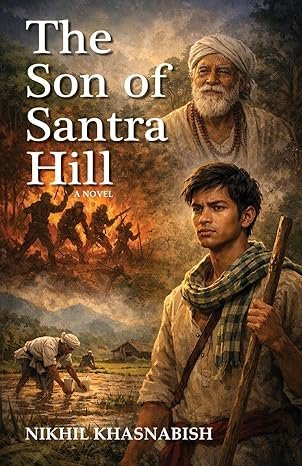
The Son of Santra Hill
₹360.00Otenga’s father, Paniram Rabha, a poor peasant, has a dream to see his son as an officer. His father gets angry when Otenga tells him about his BA result. Otenga fails to pass BA. His father asks him to search for a job at a school. But Otenga refuses to search for a job. He tells that he will work for Santra Hill to save the decimated forest and help his father in the crop fields. His father disagrees and thinks him a wastrel. His mother Mekhela Rabha supports his father. On being expelled from the house, he finds shelter in his friend Mantri Rabha’s house. Mantri has a tea stall, named Mantri Tea Stall. His mother goes to Manti Tea Stall and convinces him to come back home. He encounters Evana, a very beautiful Rabha girl. He falls in love with her. But the guru of their village, Santra Gaon, identifies the girl as a fairy. Otenga doesn’t believe her to be a fairy. Then he leaves his village after being bitten by his conscience. He has stolen money from Mantri’s cash box. While going through a forest to an unknown destination, after being bullied out of the bus in the evening because he has no money on him, he happens to find a box of gold ornaments. He meets Dani Ferang near Chandubi Lake. Dani Ferang takes him to his home. Dani Ferang’s daughter Violet loves him. He does not respond to her love. He shows them the ornaments. They ask him to quickly leave their house because they now think him a robber. He returns to his village. In Santra Hill, he happens to see two persons wearing black robes. He thinks they are fairy sisters, trapped in Santra Hill by their guru. He follows them to know whether they are fairy sisters, and if they are really fairy sisters, he decides to ask them to help him find Evana; it is his belief that fairies can do so, or if Evana is a fairy, she may be one of them. He fails to meet them. He finds himself in an unknown village, where he is made a prisoner. In a rainy November night he escapes from that village and comes back to his village. Then in Dadan Fair in April, he meets Evana and comes to know that she has been identified as a fairy by their guru, who is also Evana’s maternal uncle. The guru does not want that Evana should marry a boy like Otenga.
This is the first Indian English novel on the Rabhas, one of the major tribes in Assam.
-
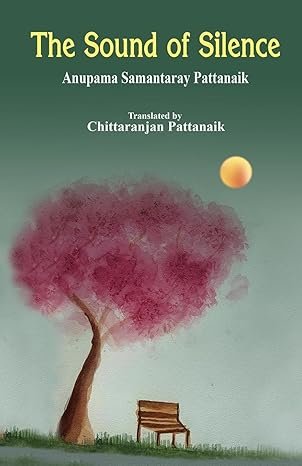
The Sound of Silence
₹350.00This collection of short stories is assiduously crafted by Ms Anupama Pattanaik on woman psychology and virtuosity, originally written in Odiya and appeared in various issues of Odiya journals. The perfect art of translation into English version by Shri Chitta Ranjan Pattanaik is manifest throughout, so much that the stories appear as if written in original English. Anupama Pattanaik has already proved herself as an accomplished story writer, highly acclaimed in the literary circle. This translated version of her short stories is an added feather in her cap. The stories verily fit into the design and shape as stated by Somerset Maugham in his book ‘On literature’ -“It is a piece of fiction, dealing with single incident, material or spiritual, that can be read at a sitting; it is original, it must sparkle, excite or impress, and it must have unity of effect or impression. It should move in an even line from its exposition to its close.”One of the fundamental principles of story composition is that of unity, says Hudson in his book- An introduction to the study of literature. He further states “…under which head we include unity of motive, of purpose, of action and in addition, unity of impression”. Anupama Pattanaik’s stories adequately fit into this principle and hence engrossing. Most of the stories revolve around women-centric plots eulogizing women’s emancipation. The story ‘Miser’ unfolds Indrani Devi’s all-encompassing tacit love for the villagers. In “Repayment”, the perfect depiction of an older lady’s compassion and noble mode of repayment of debt by the beneficiary-the aspiring girl, is a touching tale. The issue of superstition and blind belief is deftly handled in ‘Mangamma’ to the reader’s delight. The resilience of a devoted wife is suitably characterized in ‘The Shadow’ and the common trait of a devoted wife delineated magnificently.
-
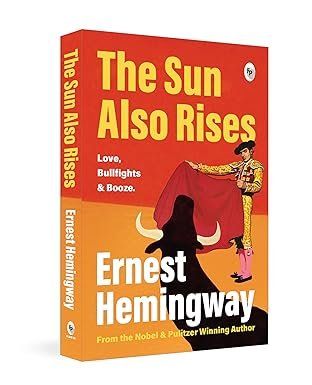
The Sun Also Rises
₹300.00A timeless exploration of post-World War I disillusionment and the “Lost Generation.” Set in Paris and Spain, the novel follows a group of expatriates navigating love, desire, and existential uncertainty. Hemingway’s spare prose captures the characters’ emotional turmoil and the societal shifts of the era. A quintessential work of modernist literature, this novel delves into themes of identity, purpose, and the search for meaning in a changing world.
A masterpiece of love, loss, and resilience
- Authentic portrayal of disillusionment and existential angst.
- Historical post-World War I fiction.
- A timeless classic that captures the characters’ emotional turmoil and the societal shifts of the era.
- Explores themes such as masculinity, identity, and love.
- A perfect gift for literature enthusiasts.
-
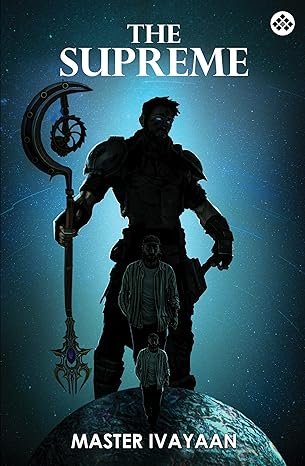
The Supreme
₹300.00The Supreme, who was born without feelings to fairly reign over the entire universe, attempted to defy fate and destiny by arriving on a random planet in search of a cure for his affliction—a curse of loneliness and a heart devoid of any feelings—which he yearned to be rid of. This book will detail his current way of life on the planet, as well as his past and future in the upcoming sequels. He would be competing against his biggest foe and going up against his greatest adversary. Can he resist his fate and overcome reality? Can he defend the multiverse from its worst enemy? Come along on The Supreme’s epic excursions and learn about the secrets of his life. Master Ivayaan is an ardent writer, but because of his academic obligations, had never considered writing a book earlier. Now he is showcasing his creativity. This debut thriller will soon be followed by three sequels. After passing out from DAV Public School in Bhubaneswar, he is studying Aerospace Engineering at Sandip University, Nashik.
-
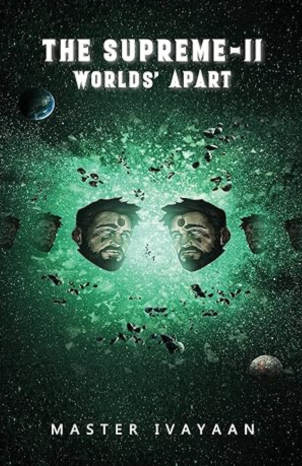
The Supreme-II: Worlds’ Apart
₹400.00One World, Many Nations, each trying to remove the existence of the other or rule over it. Just imagine how two Worlds will pose a threat to each other. This part will showcase those problems. However, which World is the real one and which is just a mirror image depends on which one survives. The Supreme faces a large number of problems in his daily life; now he has to face an outer world threat. The true adventures of The Supreme start now and we will see how he fights it. This book will detail The Supreme’s past that was intentionally hidden from everyone. Will everyone still accept him even after knowing about his past; will everyone still believe him? Will he be betrayed? What will be the result and what will he do to his betrayer-will he be kind or merciless? Is it really his fate? Is his fate already destined for someone else or does other’s fate depend on his? What will be his action? What will happen if he is fated to lose; can he resist it? Can he defend the World and his loved ones from the outer threat or would he lose many of them? Welcome back on The Supreme’s epic excursions and learn the secrets of his life.