-

Babbit
₹500.00Babbitt (1922), by Sinclair Lewis, is a satirical novel about American culture and society that critiques the vacuity of middle class life and the social pressure toward conformity. The controversy provoked by Babbitt was influential in the decision to award the Nobel Prize in Literature to Lewis in 1930.
The word “Babbitt” entered the English language as a “person and especially a business or professional man who conforms unthinkingly to prevailing middle-class standards”.
After the social instability and sharp economic depression that followed World War I, many Americans in the 1920s saw business and city growth as foundations for stability. The civic boosters and self-made men of the middle-class represented particularly American depictions of success, at a time when the promotion of the American identity was crucial in the face of rising fears of Communism. At the same time, growing Midwestern cities, usually associated with mass production and the emergence of a consumer society, were also seen as emblems of American progress. George F. Babbitt, the novel’s main character, was described by the 1930 Nobel Prize committee as “the ideal of an American popular hero of the middle-class. The relativity of business morals as well as private rules of conduct is for him an accepted article of faith, and without hesitation he considers it God’s purpose that man should work, increase his income, and enjoy modern improvements.”
Although many other popular novelists writing at the time of Babbitt’s publication depict the “Roaring Twenties” as an era of social change and disillusionment with material culture, modern scholars argue that Lewis was not himself a member of the “lost generation” of younger writers like Ernest Hemingway or F. Scott Fitzgerald. Instead, he was influenced by the Progressive Era; and changes in the American identity that accompanied the country’s rapid urbanization, technological growth, industrialization, and the closing of the frontier. Although the Progressive Era had built a protective barrier around the upstanding American businessman, one literary scholar wrote that “Lewis was fortunate enough to come on the scene just as the emperor’s clothes were disappearing.” Lewis has been compared to many authors, writing before and after the publication of Babbitt, who made similar criticisms of the middle class. Although it was published in 1899, long before Babbitt, Thorstein Veblen’s The Theory of the Leisure Class, which critiqued consumer culture and social competition at the turn of the 20th century, is an oft-cited point of comparison. Written decades later, in 1950, David Riesman’s The Lonely Crowd has also been compared to Lewis’s writings. (wikipedia.org)
-
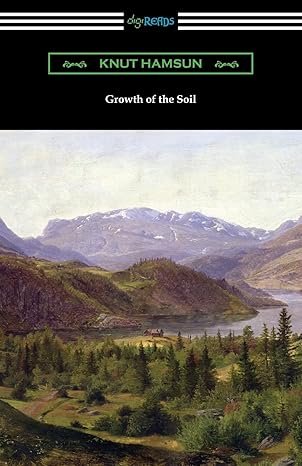
Growth of the Soil
₹550.00First published in 1917, “Growth of the Soil” is the epic and seminal work by Knut Hamsun, the Nobel Prize-winning Norwegian writer. Originally published in Norwegian and subsequently translated into numerous languages and read around the world, “Growth of the Soil” has been lauded as one of the twentieth-century’s most important and ground-breaking novels. Hamsun was a pioneer in a new more realistic style of literature and was one of the first to use a stream of consciousness writing technique that would have a profound influence on such writers as Franz Kafka, Ernest Hemingway, and Henry Miller. “Growth of the Soil” is the lyrical and intensely subjective story of Isak, a rural farmer, his family, and his local community members. Isak represents the agrarian and primitive lifestyle that Hamsun idealized as opposed to the increasingly urban and modernized world around him. Isak and his family resist the obligations and complexities of the regimented world of rules and machines, but are also perplexed and confused by it when they are forced to interact with its realities. A thought-provoking examination of the tension between the old primitive world and the new modern one, “Growth of the Soil” endures as one of literature’s modern masterpieces. This edition is printed on premium acid-free paper.
-
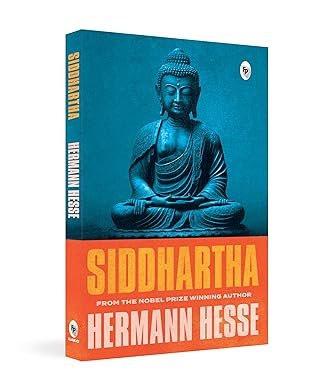
Siddhartha
₹250.00Siddhartha is Hermann Hesse’s literary masterpiece—a poetic and philosophical novel that chronicles one man’s lifelong spiritual journey in search of truth, enlightenment, and self-discovery. Set in ancient India, the novel follows Siddhartha, a young Brahmin, who renounces conventional life and undergoes a series of profound experiences—from asceticism and sensual pleasure to worldly success and eventual stillness by the river. Along the way, he explores the nature of desire, suffering, and the illusion of time—ultimately realizing that wisdom is not taught but lived.
The path to enlightenment begins within.
- Explores themes of self-realization, detachment, love, and inner peace.
- A profound novel that bridges Eastern spirituality and Western literary tradition.
- Ideal for readers of Buddhism, Vedanta, Zen, Stoicism, and self-inquiry.
- Offers a non-dogmatic approach to spiritual growth.
- Continues to resonate with readers in times of personal transition or existential reflection.
-
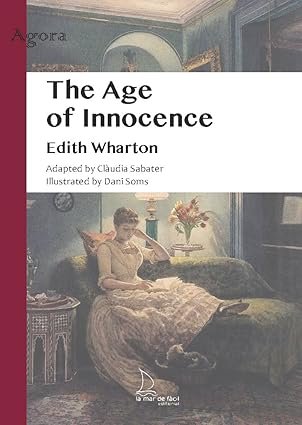
The Age Of Innocence
₹300.00The return of the beautiful Countess Olenska into the rigidly conventional society of New York sends reverberations throughout the upper reaches of society.
Newland Archer, an eligible young man of the establishment is about to announce his engagement to May Welland, a pretty ingénue, when May’s cousin, Countess Olenska, is introduced into their circle. The Countess brings with her an aura of European sophistication and a hint of scandal, having left her husband and claimed her independence.
Her sorrowful eyes, her tragic worldliness and her air of unapproachability attract the sensitive Newland and, almost against their will, a passionate bond develops between them. But Archer’s life has no place for passion and, with society on the side of May and all she stands for, he finds himself drawn into a bitter conflict between love and duty.
-
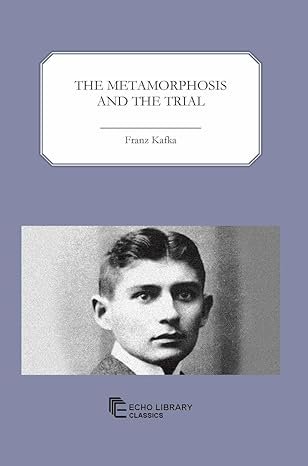
The Metamorphosis and The Trial
₹350.00In “The metamorphosis,” a man finds himself transformed into a huge insect and experiences many changes in his life, and in “The trial,” narrates the experiences and reactions of a respectable bank functionary after his abrupt arrest on an undisclosed charge.
-
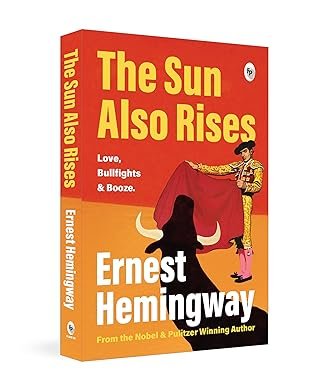
The Sun Also Rises
₹300.00A timeless exploration of post-World War I disillusionment and the “Lost Generation.” Set in Paris and Spain, the novel follows a group of expatriates navigating love, desire, and existential uncertainty. Hemingway’s spare prose captures the characters’ emotional turmoil and the societal shifts of the era. A quintessential work of modernist literature, this novel delves into themes of identity, purpose, and the search for meaning in a changing world.
A masterpiece of love, loss, and resilience
- Authentic portrayal of disillusionment and existential angst.
- Historical post-World War I fiction.
- A timeless classic that captures the characters’ emotional turmoil and the societal shifts of the era.
- Explores themes such as masculinity, identity, and love.
- A perfect gift for literature enthusiasts.